Fleet
Device-Agnostic Fleet Data Platform: Why Your Telematics Vendor Isn't One
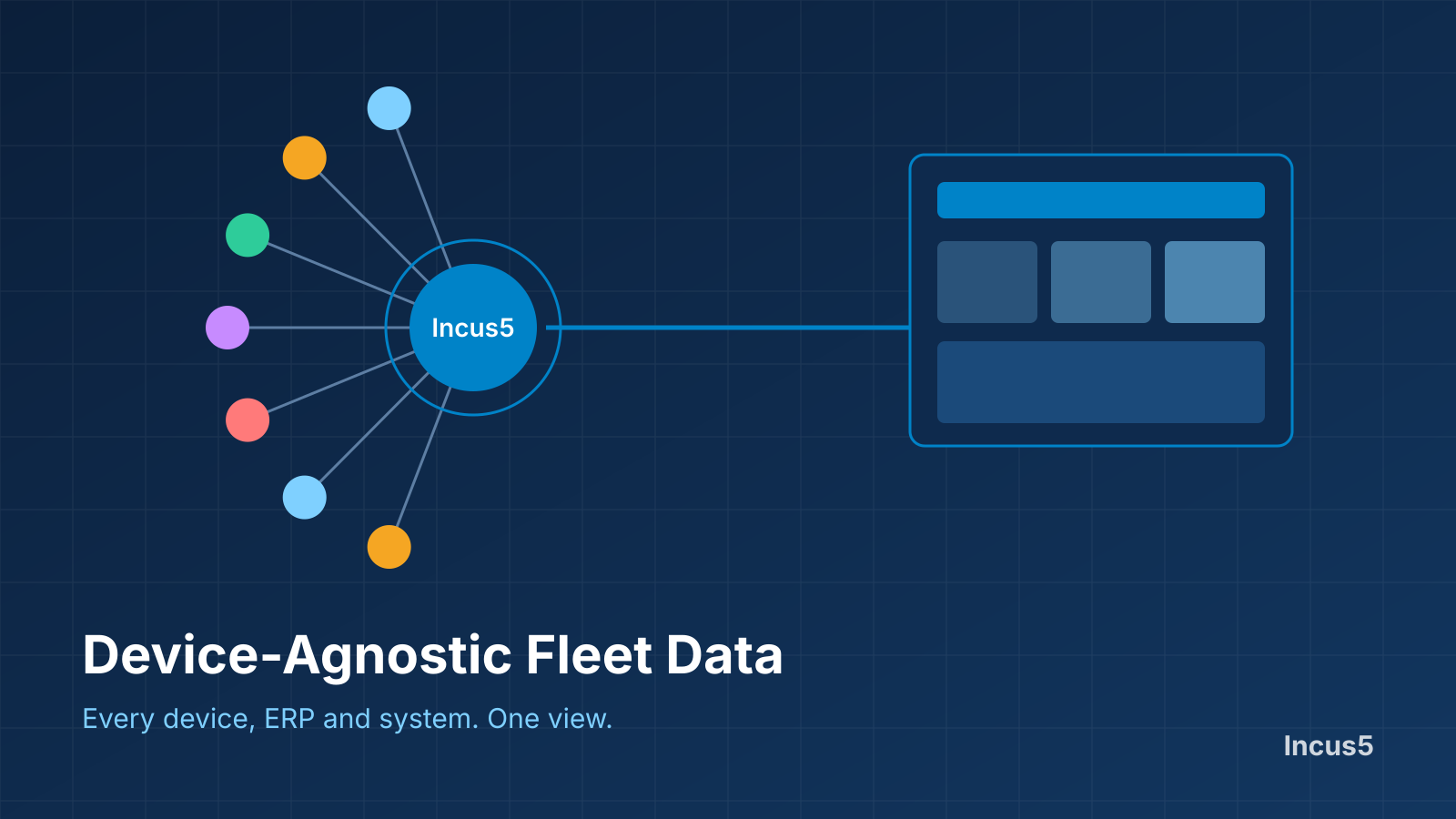
If your fleet runs on more than one brand of machine, someone on your team is probably spending half a day or more every time you need a complete picture: exporting from each OEM portal, merging it by hand, and hoping it is still accurate by the time it is finished. A device-agnostic fleet data platform exists to end that. It sits above every device, OEM and system, and brings the data together without the manual work.
Most equipment fleets do not run on one brand of machine or one brand of telematics. A rental company might have OEM-installed telematics on some units, aftermarket trackers on others, and nothing at all on older machines and attachments. The data lives in a different place for each, and the rental system of record is somewhere else again.
A device-agnostic fleet data platform does not care which device reported the data or which vendor built the machine. It brings the data together and makes it usable.
What "device-agnostic" actually means
Device-agnostic means the platform is not built around one hardware product. The telematics device is an input, like an ERP export or a manual hour-meter entry. If you change devices, add a new OEM, or acquire another fleet, the platform keeps working and the history stays intact.
That is different from a platform that supports several brands but depends on its own hardware to work well. The test is simple: if you removed the vendor's device from the picture, would the product still be useful?
What it connects
- Telematics and IoT data: OEM feeds and aftermarket devices, including location, engine hours, fault codes and fuel.
- ERP and dealer systems: rental contracts, asset records, work orders and billing, so machine data lines up with the business.
- Operational data: inspections, service history, utilization and cost.
- Untracked equipment: machines with no device on board, tracked with manual hours and the same service rules as everything else.
How it differs from the alternatives
OEM telematics portals are built to support one manufacturer's machines. They do that well, but they only show you that brand.
ERP-bundled telematics adds telematics to a system built for contracts and billing. The ERP vendor decides which devices are supported and how deep the data goes.
Single-vendor telematics works best when every machine carries that vendor's hardware. Mixed fleets rarely do.
A device-agnostic platform is the neutral layer. Every ERP and telematics vendor is biased toward its own stack. A neutral platform is not.
What the manual process costs
Companies with several OEMs and telematics vendors tell us the same story. Someone on staff spends half a day to a full day logging in to each portal, exporting the data, and merging it into a spreadsheet. By the time the file is done, the numbers are already out of date. And when that person is out, or the file gets overwritten, the work is gone and has to be done again.
A fleet data platform removes the export-and-merge step. The data from every source is brought together continuously, so the view is current when you open it.
What to ask when evaluating one
- Does it work if I keep my current devices and add new ones later?
- Which OEMs, telematics vendors and ERPs does it connect to natively, and which are live today?
- How does it handle a machine with no telematics?
- How does it match the same machine across two data sources?
- Can I get my data out through an API?
Where Incus5 fits
Incus5 connects 51+ telematics, OEM and ERP systems, covering telematics and IoT partners as well as ERP and dealer systems. It shows owned and rented equipment in one view, including assets with no telematics installed, and it exposes the data through a REST API. For the full list, see the integrations directory.
Key takeaways
- A device-agnostic fleet data platform treats telematics devices, OEM systems and ERPs as inputs, not as lock-in.
- It unifies telematics, ERP and operational data, including machines with no device on board.
- OEM portals, ERP add-ons and single-vendor telematics each favor their own stack. A neutral platform does not.
- The test: would the product still be useful if you removed the vendor's own device?
Frequently asked questions
What is a device-agnostic fleet data platform?
It is software that collects equipment data from any telematics device, OEM system or ERP and presents it in one consistent view. It is not tied to one hardware vendor, so you can change or add devices without rebuilding your reporting.
Is a device-agnostic platform the same as an OEM telematics portal?
No. An OEM portal covers one manufacturer's machines. A device-agnostic platform covers every brand and every data source in the fleet, including machines that send no data.
Do I need to replace my existing telematics devices?
No. The point is to keep the devices you already have and add their data to one view. You can add or swap devices later without losing history.
Can it track equipment that has no telematics?
Yes. Untracked machines can be managed with manual hour entries and the same service and utilization rules as tracked ones, so the whole fleet appears in one place.