Intelligence
The Value of Historical Equipment Telematics Data
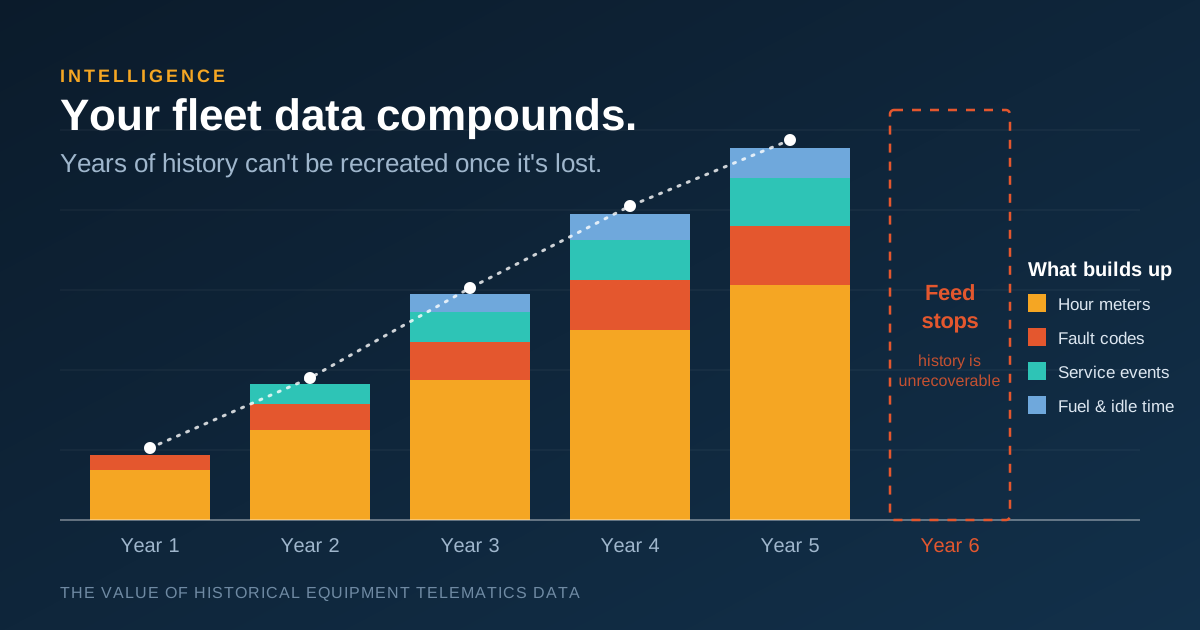
A machine has been reporting telematics data for six years. Hour meters, fault codes, location pings, fuel levels, idle time. Then the subscription lapses, or the provider changes terms, or someone decides the monthly fee is not worth it. The feed stops. Those six years of records do not come back.
This is not a technical problem. It is a strategic one. The data a telematics device collects is not just operational information. It is an asset that compounds over time, and most operators treat it like a disposable utility.
What accumulates in a telematics feed
Every hour of runtime, every fault code, every service event builds a record that gets richer the longer it runs. A machine with two months of data tells you where it is and maybe what it is doing right now. A machine with five years of data tells you how it behaves under load, how its fuel consumption has changed as hours accumulate, when it tends to throw codes, and what its service intervals actually look like versus what the manual says.
| Data type | At six months | At five years |
|---|---|---|
| Hour meters | Current runtime, recent trend | Full utilization curve, seasonal patterns, anomalies over time |
| Fault codes | Recent alerts | Recurring issues, failure patterns, early warning signatures |
| Service events | Last PM date | Actual intervals versus scheduled, cost trends, component life |
| Fuel consumption | Recent burn rate | Efficiency degradation, baseline comparison, cost per hour accuracy |
The difference is not incremental. A five-year record answers questions a six-month record cannot even frame.
Why this data cannot be recreated
If a machine ran 4,000 hours over the past five years, that history is gone the moment the connection stops. You cannot go back and capture the fault codes it threw in year two. You cannot reconstruct the utilization pattern from 2022. The machine’s hour meter keeps running, but the context disappears.
This matters most at the moments when you need history: forecasting a major service event, deciding whether to keep or dispose of an asset, defending a residual value to a buyer, or understanding why a machine that looked fine on paper has been a maintenance problem.
What historical depth enables
Service forecasting improves with every hour logged. Not the generic intervals from the manual, but the actual behavior of this machine in your operation. Some machines run harder than others. Some throw codes early. Some go twice the recommended interval with no issues. You cannot see any of that without years of data.
Residual value is easier to defend when you can show the buyer exactly how the machine was used: hours per year, utilization pattern, service history, fault record. The alternative is a number on a spec sheet and a walk-around inspection.
Cost per hour calculations get more accurate as data accumulates. Fuel, service, downtime: the real numbers come from the record, not from estimates. On a 200-asset fleet, the difference between estimated and actual cost per hour can be substantial, and it compounds over time.
What solving this looks like
Keep telematics data in a system you control rather than one tied to a subscription you might cancel or a vendor you might leave. Treat the data layer as a long-term asset rather than a feature of the current tracking product. When the telematics provider changes, the history should stay.
Incus5 is a fleet data intelligence platform that reads data from the telematics systems you already have, across OEMs and aftermarket devices, and holds it in a unified record that stays with you. We do not sell hardware or lock data to a device. The longer your machines have been reporting, the more useful that record becomes.
The data you have been collecting for years is worth more than you think. The question is whether you can still reach it.
Key takeaways
- Historical telematics data captures years of hour meters, fault codes, and utilization patterns that cannot be recreated once lost or disconnected.
- A machine with five years of data reveals failure patterns, seasonal utilization curves, and actual service intervals that a six-month record cannot show.
- This accumulated record improves service forecasting, strengthens residual value negotiations, and makes cost per hour calculations more accurate.
- Keep telematics data in a system you control, independent of any single vendor or subscription, so the history stays when providers change.
Frequently asked questions
What happens to historical telematics data when you change providers?
If your telematics data lives only in the provider’s platform, it typically stays there when you leave. Years of hour meters, fault codes, and service records become inaccessible. Some providers offer data exports, but the format may not be usable in another system. The safest approach is to store data in a platform you control, independent of any single telematics vendor.
How long does telematics data need to accumulate before it becomes useful?
Basic location and runtime data is useful immediately. Deeper value emerges over one to two years as patterns become visible: seasonal utilization curves, recurring fault codes, actual service intervals versus scheduled ones. After five years, you can see efficiency degradation, long-term maintenance trends, and enough history to forecast major service events with confidence.
Can historical telematics data affect equipment resale value?
Yes. Buyers pay more for machines with documented history. A complete record showing hours per year, utilization patterns, service events, and fault history gives the buyer confidence the machine was maintained properly. Without that record, the buyer relies on a visual inspection and the number on the hour meter, which typically means a lower offer.
What types of telematics data are most valuable over time?
Hour meters and fault codes become most valuable with age. Hour meters reveal utilization patterns and help forecast component life. Fault code history shows recurring issues and early warning signatures. Service records tied to hours (not just dates) show actual maintenance intervals. Fuel consumption data over time reveals efficiency degradation that affects cost per hour calculations.