Fleet
ISO 15143-3 and AEMP 2.0: The Standard That Solves Half the Problem
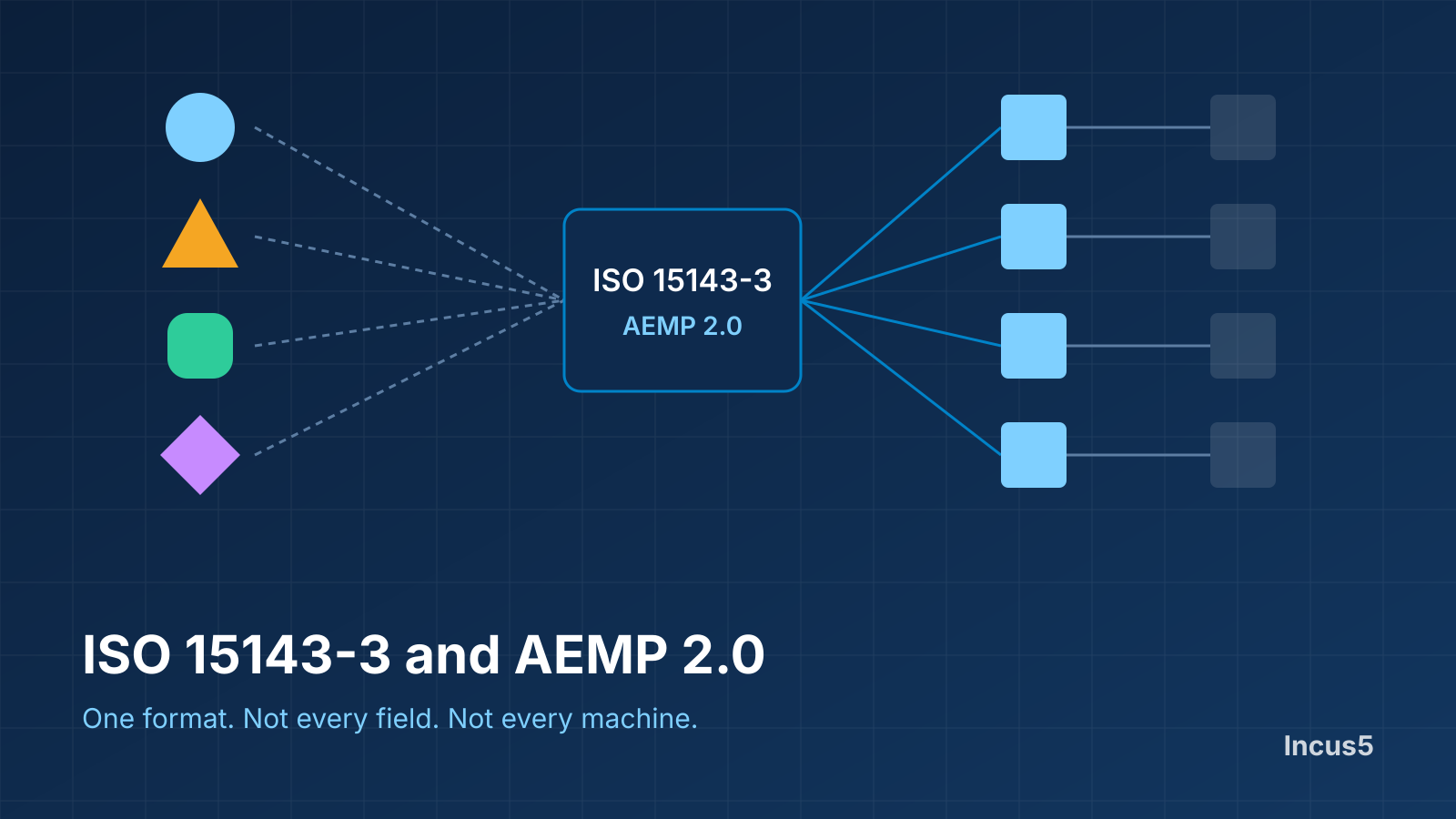
If you run machines from several manufacturers, you have probably heard that ISO 15143-3 or AEMP 2.0 will make your telematics data easier to combine. That is partly true. Here is what the standard does, and where it stops.
What it is
ISO/TS 15143-3 specifies a communication schema for providing machine status data from a telematics provider's server to third-party client applications over the Internet. It grew out of the AEMP 2.0 telematics standard from the Association of Equipment Management Professionals, and the two names are now used for the same thing in practice. The ISO specification is currently in its second edition, published in 2020.
How it works
Instead of every OEM inventing its own API, the standard defines common endpoints and field names. A client can request a fleet snapshot covering many machines, a snapshot for a single machine, or time series data. Results are paged so large fleets can be retrieved in sections. Each machine record carries header information such as make, model, equipment ID and serial number, along with operating data the provider supports, for example location, operating hours and fuel.
Why it matters for mixed fleets
When several OEMs publish data in the same structure, a fleet platform can read each one with the same logic instead of a custom connector per brand. That cuts integration effort and makes it easier to compare machines across manufacturers.
What it does not do
- It does not cover machines with no telematics. Older units and attachments still need another way to be tracked.
- It does not guarantee every field. Providers decide which data points they supply, so coverage varies by OEM and by machine.
- It does not connect your data to your rental system. Matching machines to ERP asset records is still your job, or your platform's.
- It is not the only feed. Many vendors also offer their own APIs with richer data, and some fleets include devices that do not publish the standard at all.
Questions to ask your vendors
- Does my ERP read ISO 15143-3 feeds directly, or does it rely on a separate integration?
- Which edition and which fields does each of my telematics providers supply?
- What happens to machines that do not publish the standard?
- How are machines matched to my asset records?
Where Incus5 fits
A standard makes data easier to collect, but it does not give you a complete fleet view on its own. Incus5 reads ISO 15143-3 data wherever the OEM or telematics provider makes it available, and it connects natively to 51+ telematics, OEM and ERP systems for the rest. It shows owned and rented equipment in one place, including machines with no telematics installed. See the integrations directory for the current list.
Key takeaways
- ISO 15143-3 and AEMP 2.0 refer to the same telematics data-sharing standard in practice.
- It defines common endpoints and fields so third-party software can read machine data from many OEMs the same way.
- It does not cover untracked machines, guarantee every field, or match machines to your ERP.
- Ask each vendor which fields and which edition they actually support.
Frequently asked questions
Are ISO 15143-3 and AEMP 2.0 the same thing?
In practice, yes. AEMP 2.0 is the telematics standard from the Association of Equipment Management Professionals, and ISO 15143-3 is the ISO specification built on it. People use the names interchangeably.
Does my ERP support ISO 15143-3 telematics data?
It depends on the ERP. Some read the feed directly, and others rely on a separate integration or a fleet data platform. Ask your ERP vendor which edition and which fields it ingests.
Does the standard include every machine in my fleet?
No. It only covers machines that have telematics from a provider that publishes the feed. Machines with no device, and devices from vendors that do not publish it, need another route.
Do all OEMs provide the same data under the standard?
The structure is common, but providers decide which fields they supply. Coverage varies by OEM and machine, so check the fields you rely on, such as hours, location and fuel.