Perspective
Choose the Software First. Let the Hardware Follow.
Is your telematics strategy built around a device, or around the decisions you need to make?
For many operations teams, it starts with hardware. Pick a device, install it across the fleet, then look for software that can make sense of what it sends. But the goal was never the device. The goal is running a better business: higher utilization, fewer surprise breakdowns, accurate billing, and better decisions about what to buy, move, or sell.
That doesn’t make hardware unimportant. The right device on the right asset is critical, because it has to capture the data your business depends on. But hardware selection should serve the value you’re after, not define it. Start with the outcome, choose software that can deliver it, and let the hardware follow.
Hardware Is the Commodity
Telematics hardware isn’t getting cheaper. Aftermarket devices keep climbing in price, while OEM telematics comes factory-installed and is usually the lower cost of ownership. Ripping out hardware that already works to install someone else’s box isn’t a strategy. It’s an added expense. (We dug into the economics of that in Why Your Fleet Management Software Shouldn’t Come With a Box.)
What makes hardware a commodity is that every reputable device captures the same core signals: location, engine hours, fuel, fault codes. The catch is that ten brands deliver that data ten different ways, through ten different portals, with no sign of convergence. And every fleet needs the freedom to pick the right hardware for each asset, whether that’s a crawler crane, a weekend-rental scissor lift, or a light tower parked for three months.
That’s why the software has to do the heavy lifting.
The Software Has to Handle Any Hardware, and All of the Data
Almost every platform claims it can bring in everyone’s data. The real question is: all of it, or only the parts that fit their system?
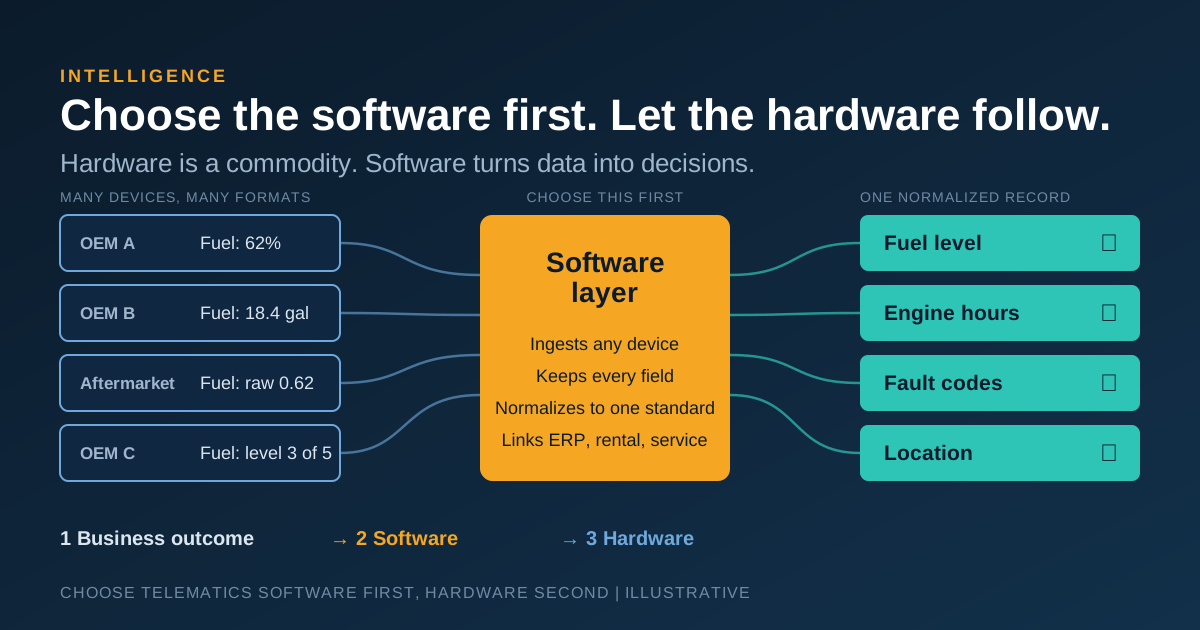
Take fuel. One OEM reports fuel level as a percentage. Another reports fuel remaining in gallons. If a platform was built around one of those fields, the other gets dropped, mislabeled, or buried in a raw data tab nobody opens. The logo shows up on the integrations page, but the number your team needs never shows up on the screen.
The right software connects to any hardware you choose, captures the full depth of data each source provides, and translates it into one common language. Then it connects that data to your ERP, rental contracts, and service schedules, so it answers real business questions. What’s idle? What’s due for service? What’s making money? That’s the work platforms like Incus5 and Clue are built around, and it’s how fleets finally put to work the data they already own.
Questions to Consider for Your Solutions Provider
- What if our current telematics are non-standard? Can we still ingest them?
- What happens when our telematics providers have unique data values we need available in the solution?
- Do you normalize all the data from all our providers? What’s the standard?
- Assuming I can obtain history from my current telematics provider, can I bring that data into the solution?
If the answers keep circling back to “install our device” or “we only support standard fields,” you’re buying a box, not a strategy.
The Bottom Line
Hardware is a commodity. Data is the currency. Software is what turns one into the other. Choose it first, and let every other decision serve the insights your business actually runs on.
Key takeaways
- Telematics strategy should start with the business insights a fleet needs, then the software that delivers them, then the hardware.
- Telematics hardware is not getting cheaper, and factory-installed OEM telematics usually carries the lower total cost of ownership.
- Devices across brands capture the same core signals but deliver them in different formats with no convergence, which is why software must do the heavy lifting.
- Claims of integrating with every provider can hide dropped or mislabeled data; fleets should ask which fields are pulled from each source.
Frequently asked questions
Why should fleets choose telematics software before hardware?
Hardware captures the same core signals across brands, so it rarely decides business outcomes. Software determines whether data from every source can be unified, normalized and connected to ERP, rental and service systems. Choosing software first ensures the hardware decisions that follow serve the insights the business needs.
Is telematics hardware getting cheaper?
No. Aftermarket device prices continue to rise, while OEM telematics comes factory-installed and usually carries a lower total cost of ownership. That makes replacing working OEM hardware with an aftermarket device an added expense rather than a strategy for most fleets.
What does it mean when a platform says it integrates with all telematics providers?
It often means the platform connects to many providers but only imports fields that fit its data model. Unique values, such as fuel remaining in gallons versus fuel level as a percentage, can be dropped or mislabeled. Fleets should ask which fields are pulled from each source and how non-standard data is handled.
Can historical telematics data be brought into a new platform?
In many cases, yes, if the fleet can obtain the history from its current provider. Historical hour meters, fault codes and utilization patterns improve service forecasting and trend analysis, so fleets should confirm that a platform can ingest that history before switching.